
As a licensed cannabis shop, we get questions from shoppers on the best THC edibles for managing pain and inflammation.
Many tell us they’re looking for options that help them relax, ease tension, and feel more comfortable.
Here are the cannabis edibles customers choose when they’re looking for deeper relaxation and body comfort.
Disclaimer: Cannabis products are not intended to diagnose, treat, cure, or prevent any disease. Individual experiences may vary. If you have a medical condition or are taking medications, consult a qualified healthcare professional before using cannabis products.
Edibles Shoppers Choose for Relief and Relaxation
If you’re looking for edibles that help relieve pain, there are products made with relaxation in mind.
While cannabis products aren’t intended to diagnose or treat medical conditions, we get questions like, “what are the best gummies for pain and relaxation” or “what’s good for dealing with arthritis pain and helping me fall asleep”?
Shoppers who ask these question are looking for edibles that promote relaxation and body comfort.
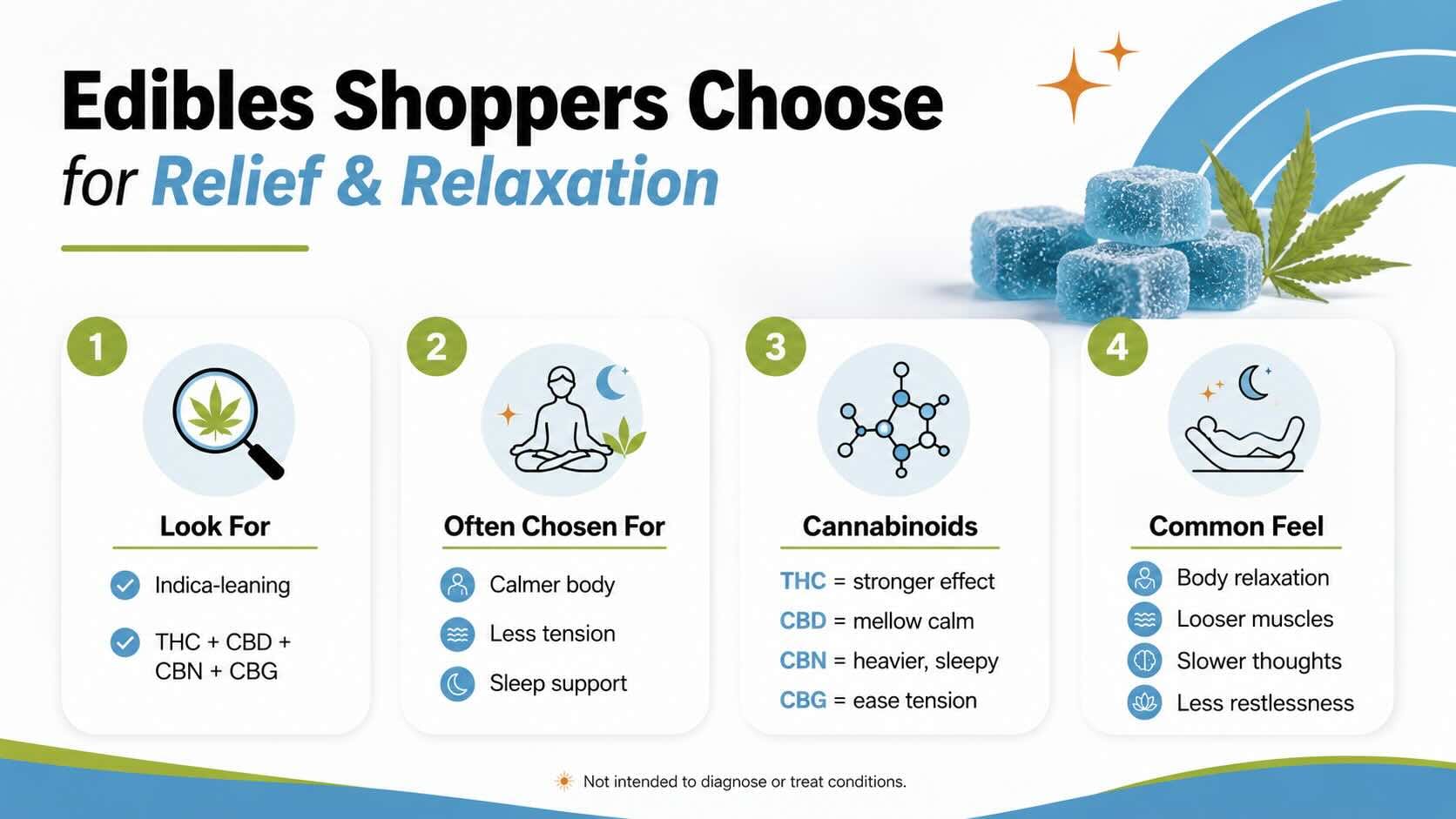
Edibles that are more likely to promote relaxation are indica-leaning and have a blend of THC, CBD, CBN, or CBG. These cannabinoids are associated with calmer, more body-focused effects.
THC brings the stronger edible effect.
CBD is known for bringing a more mellow, relaxing feel.
CBN can bring heavier relaxation and sleep.
And CBG may help ease tension without feeling as sleepy as CBN.
Indica-style gummies are associated with a heavier body feeling, slower thoughts, looser muscles, and less restlessness.
When shopper ask for edibles that help with pain, I point them toward more calming blends like these:
1) Wyld Elderberry Gummies
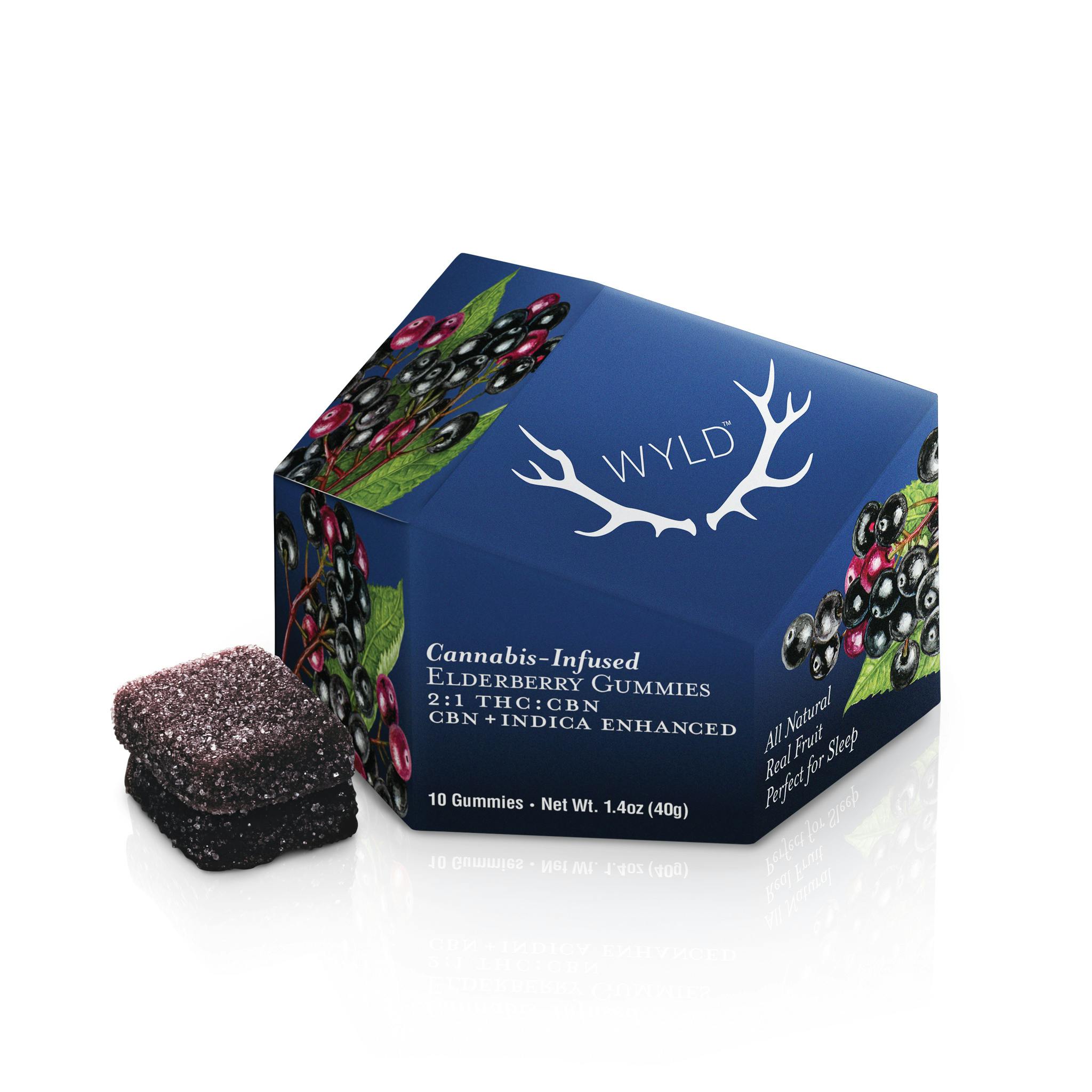
Wyld’s Elderberry is a go-to nighttime edible. This is one shoppers ask about when they want gummies for pain and sleep.
The reason is the blend.
These have an indica-leaning terpenes profile which can bring heavier, more body-focused effects.
Many view indica-heavy products as the ones that help soothe muscle soreness and relieve back pain.
Each gummy has 10mg THC with 5mg CBN.
THC brings the stronger edible effect. CBN has a reputation for promoting heavier relaxation and deeper sleep.
2) Camino Blackberry Dream
![Camino Sours 'Deep Sleep' Blackberry Dream CBN/CBD Gummies [10pk] image 0](https://images.dutchie.com/88925280440378318d0366cdc8800104)
Camino’s Blackberry Dream gummies bring a higher dose of THC and add CBD to the mix.
Each serving has 10mg THC, 10mg CBN, and 10mg CBD.
This is a full nighttime blend built around three cannabinoids shoppers connect with body relief.
CBN adds the heavier, sleepier feel.
CBD brings a more mellow, calming layer.
People dealing with sore muscles or back discomfort want something that helps them loosen up and make falling asleep feel easier.
That’s why these are a popular pick.
3) Off Hours Blueberry Pie
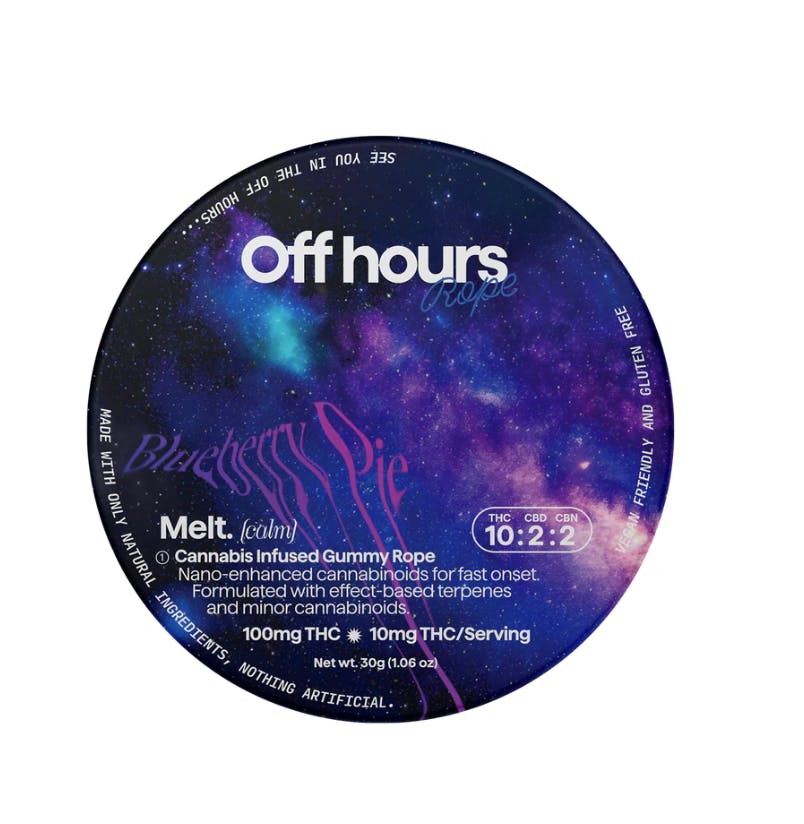
Off Hours Blueberry Pie is more THC-forward.
Each serving has 10mg THC, 2mg CBD, and 2mg CBN.
You get a stronger gummy with a little balance from CBD and CBN.
What also makes these stand out is the nano-enhanced formula.
Nano edibles can kick in faster, so shoppers say they choose these when they want faster relief. Many don’t want to wait as long for the effects to build.
4) Grön Sour Grape Mega
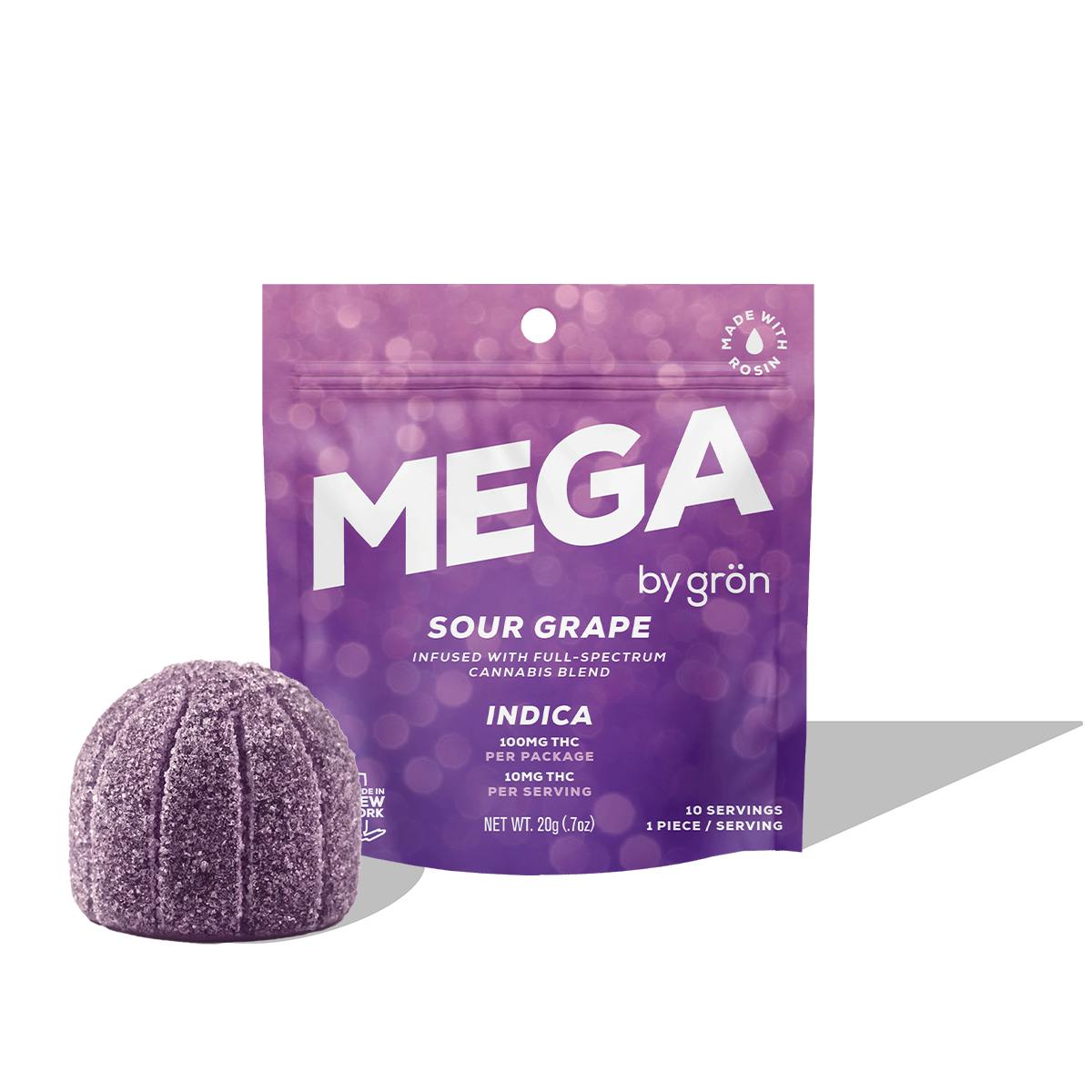
Grön is known for making larger-format potent edibles.
The Sour Grape Mega gummy has 100mg of THC in a single piece.
For pain-focused shoppers, the appeal is the potency.
A higher-dose edible can feel more intense physically than a 10mg gummy.
People with higher tolerance or more persistent discomfort look at products like this when regular gummies don’t feel strong enough.
Even though it comes as one large gummy, most cut it into smaller pieces.
5) Ayrloom Sweet Plum
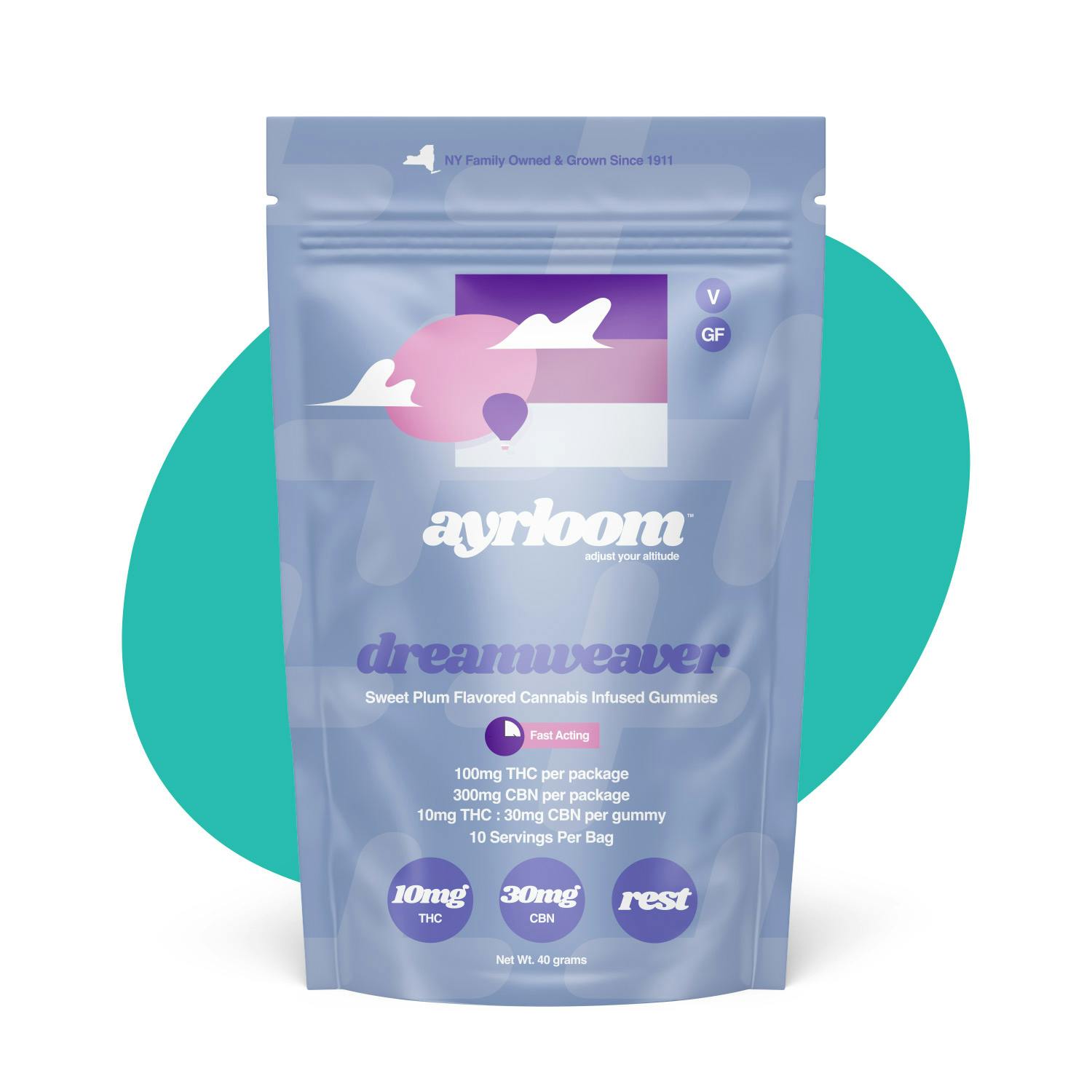
Ayrloom’s Dreamweaver gummies lean harder into CBN.
Instead of using CBN as a small add-on, each gummy has a 1:3 THC:CBN ratio.
The higher CBN dose is what makes shoppers look at this as a deeper wind-down option.
Why People Choose These THC Gummies for Pain and Sleep
When people ask for the best gummies for pain and sleep, they aren’t looking for an edible that brings more body-focused effects.
We get shoppers who deal with back pain, chronic pain, inflammation, arthritis, fibromyalgia, and other concerns.
They come in looking for edibles that calm the body, ease tension, relax sore areas, and make it easier to wind down at night.
That is why they look for gummies with THC, CBN, CBD, indica-leaning terpene profiles, or higher THC doses.
These gummies aren’t a cure for pain. But they’re the types of products shoppers commonly ask about when they want something that feels relaxing and body-focused.
What Shoppers Are Really Looking For
Most pain-focused shoppers describe what they want in simple terms.
They want their body to feel less tight.
Their back, shoulders, legs, or joints to feel more relaxed.
And something that helps them settle down after a long day.
They want an edible that feels more like a body high than a head high.
That is the main reason these gummies come up in pain and sleep conversations.
People are looking for comfort, calm, and a heavier edible effect.
Why Cannabinoid Blends Matter
THC brings the stronger edible effect, but many people want that effect paired with cannabinoids that make the experience feel calmer or more sleep-friendly.
CBD is associated with a mellow, relaxing feeling.
Many look for CBD in gummies when they want the edible with soothing effects.
CBN has a reputation for heavier relaxation and sleep. You’ll see this one in nighttime gummies.
CBG is one shoppers look for when they want body comfort.
Together, these blends can make a gummy feel more well-rounded than a THC-only edible.
Why “Indica-Leaning” Still Matters to Shoppers
When someone asks for an indica gummy, they they want something feels calmer and brings physical effects.
The type of edible that feels better for the couch or bedtime.
That is why indica-leaning gummies are part of the pain relief conversation.
For many shoppers, “indica” signals relaxation and body comfort.
Why Higher Potency Comes Up
Some look for stronger gummies when 10mg edibles don’t feel like enough.
A higher-dose gummy can feel even more physical, which is why experienced edible users look for potent options.
Other Types of Edibles to Know
What the Science Says About Cannabis and Edibles for Pain
“Research shows that 93% of medical cannabis users prefer cannabis over opioids, while 97% say they can decrease opioid usage when taking cannabis.”
Several major scientific reviews suggest cannabinoids may influence how the body processes discomfort.
A review by the National Academies found evidence that cannabis or cannabinoid-based products can help reduce chronic pain symptoms in some adults.
More recent research has also showed how different cannabinoids work.
Studies suggest that THC may play a role in short-term pain reduction, while CBD is more often associated with relaxation and tension relief, though results vary between individuals and conditions.
Health authorities emphasize that the evidence is still limited for many types of pain, and more research is needed to understand how cannabis products compare to other options.
How Do Cannabis Edibles Work?
Your body’s Endocannabinoid System (ECS) is a natural pain management network that uses receptors and cannabinoids to regulate mood, sleep, appetite, and pain signals.
Cannabinoids like THC and CBD support the ECS, enhancing its effectiveness.
THC (tetrahydrocannabinol) binds to CB1 receptors in the brain and nervous system.
CBD (cannabidiol) targets CB2 receptors in the immune system.
When you eat an edible, cannabinoids travel through your digestive system to the liver. There, THC is converted into 11-hydroxy-THC, a more potent compound that provides longer-lasting effects than smoking or vaping.
Scientific research on chronic neuropathic pain shows promising results for cannabis as an effective pain reliever. Studies have found a clear connection between THC dose and managing short-term discomfort.
Ingesting Cannabis
The stomach, small intestine, and liver absorb and process cannabinoids.
Effects from edibles can be delayed by 30 to 90 minutes.
The liver’s conversion of THC to 11-hydroxy-THC provides sustained effects for 4 to 6+ hours, making edibles a popular option for easing tension.
Key Cannabinoids: THC vs. CBD
Research on balanced cannabidiol use in chronic pain shows that a THC/CBD combination can provides more comprehensive relief than either cannabinoid alone.
THC is known for its psychoactive effects; altering how the brain processes signals and boosts dopamine.
Many people believe higher THC doses often correlate with greater pain reduction.
CBD, a non-psychoactive cannabinoid, that some believe helps reduce inflammation.
The Role of Terpenes and Minor Cannabinoids
Some people think terpenes, the compounds responsible for strain-specific scents, offers therapeutic benefits.
Myrcene, for example, is said to have relaxing and anti-inflammatory properties, while Caryophyllene is believed to have anti-inflammatory effects.
Minor cannabinoids like CBG (cannabigerol) and CBN (cannabinol) are also play a role in easing tension.
Safe Dosing and Best Practices for Edible Consumption
How cannabis affects you can depend on things like your body weight, your metabolism, and your tolerance.
We suggest starting with microdose, around 2.5mg to 5mg of THC.
This amount allows you to gently introduce your body to the effects of the edible.
If you’re managing chronic pain or currently taking other medications, it’s best to consult a healthcare professional.
They can offer personalized guidance and ensure that incorporating edibles into your routine is safe.
Product Labels
Labels tell you how much THC and CBD you’re getting, plus any other cannabinoids and ingredients. You can also see infornation about third-party lab testing, potency, and purity (ensuring the product is free from harmful contaminants like pesticides, heavy metals, and mold).
Look for a QR code or website link to a Certificate of Analysis (COA) – this is your proof that what you’re buying is accurately labeled.
What Are the Potential Risks?
Common side effects can include feeling a bit dizzy, experiencing dry mouth (often nicknamed “cottonmouth”), feeling drowsy, or even nausea or an upset stomach (especially if the dose is too high).
Some people might also notice impaired coordination or, with higher THC doses, feel some heightened anxiety or paranoia.
Your thoughts might also feel a bit cloudy, leading to impaired cognition.
The biggest risk for beginners, is over-intoxication because of that delayed onset we talked about.
If you’re on any prescription medications, especially pain relievers or sedatives, please talk to your healthcare provider before trying cannabis edibles.
They can help you understand any potential conflicts.
For more detailed information on cannabis side effects, you can explore resources like the National Center for Biotechnology Information.
Learn more about edibles and anxiety
Frequently Asked Questions About Edibles for Pain
Are sativa or indica edibles better for pain?
Surveys show that regular edibles consumers prefer indica-leaning edibles when asked what products they prefer when seeking pain relief.
They’re commonly associated with calming, full-body experiences rather than the more energizing effects people often link with sativa varieties.
How long does it take for effects to kick in?
You’re looking at anywhere from 30 minutes to 2 hours before you start feeling effects.
If you’ve got an empty stomach, things might kick in a bit quicker, while a full belly can slow things down.
Fast-acting gummies with nano-emulsion technology can start working in as little as 15-20 minutes.
Peak effects usually happen around 2-4 hours after you take your dose.
Can I build a tolerance to cannabis edibles?
Yes, if you’re using them regularly or at higher doses.
Your endocannabinoid receptors get used to having cannabis around and become less sensitive over time.
Scientists call this “downregulation,” but really it just means your usual dose might not hit the same way it used to.
If you notice your go-to dose isn’t giving you the relief it once did, don’t panic and don’t immediately jump to taking more.
Instead, consider taking a “tolerance break” or “T-break.” This just means taking a few days to a couple weeks off from cannabis to let your system reset.
It sounds counterintuitive and painful, but most people find that after a short break, they can go back to a lower, more effective dose.